Summer is breaking temperature records this year. Extreme heat has become a major test for urban infrastructure. People find it very hard to tolerate such difficult weather conditions. But complex medical equipment suffers from the heat just as much. Your expensive MRI scanner is now at maximum risk. Heat can easily stop the work of your entire clinic. A scanner breakdown means canceling dozens of patient appointments. This always leads to huge financial losses for the business. Today, we will discuss the main threats of the hot season. We will also explain how to reliably protect medical scanners from overheating.
How the Scanner’s Cooling System Works
The heart of any scanner is a huge superconducting magnet. It must constantly operate at extremely low temperatures. To achieve this, liquid helium is kept inside the magnet. This vital system is called cryo cooling. It requires absolutely perfect working conditions. There is usually a powerful air conditioner inside the clinic’s technical room. It is always cool and safe there.
However, the cooling system has an external vulnerable part. This is the large water chiller. It is always installed outside or on the roof of the building. This unit removes excess heat from the compressor. During a period of extreme heat, this outdoor chiller works at the absolute limit of its physical capabilities.
Main Causes of Breakdowns in Summer
The scorching sun intensely heats the metal casing of the chiller. Hot outdoor air makes it hard for radiators to cool the water effectively. Urban dirt often makes this situation much worse. Street dust, poplar fluff, and dry leaves quickly block the radiator grilles. The fans simply cannot push fresh air through such a dense barrier. The water temperature in the internal circuit begins to rise rapidly.
Hydraulics also suffer greatly in this kind of weather. The main or small pump for water circulation can easily break down. If this small pump stops, the cooling liquid stops flowing through the pipes. The compressor immediately stops receiving the saving cold water.
Chain Reaction and the Threat of Disaster
What happens after the water supply stops? The helium compressor overheats very quickly. Its internal protection triggers, and it turns off automatically. It stops supplying compressed gas to the cold head of the scanner. The entire active cooling process of the magnet stops completely. The temperature inside the cryostat begins to rise steadily. The helium pressure increases rapidly.
If this problem is not solved quickly, an emergency gas release will occur. Engineers call this process a quench. Losing liquid helium costs a colossal amount of money for any medical center. Refilling the scanner takes a lot of time. Reliable GE healthcare equipment is famous for its excellent quality. The famous scanners from the Signa product line operate very stably. But even they cannot break the basic laws of physics. All machines need a constant and correct operating temperature.
How to Prevent Disaster with Data
You need a clear action plan for the hot season. Standard manual checks of the technical room are no longer enough. The gas pressure rises too quickly. A person cannot stay near the machine around the clock. You need automatic digital control over all important parameters.
An excellent modern solution is the smart Magmon hardware module. This compact electronic device collects the most accurate data directly from your magnet’s sensors. It works every single second without pauses or interruptions. The module carefully monitors the helium level. It strictly controls the temperature of the thermal shields. It constantly measures the working pressure inside the system.
Instant Alerts Save Equipment
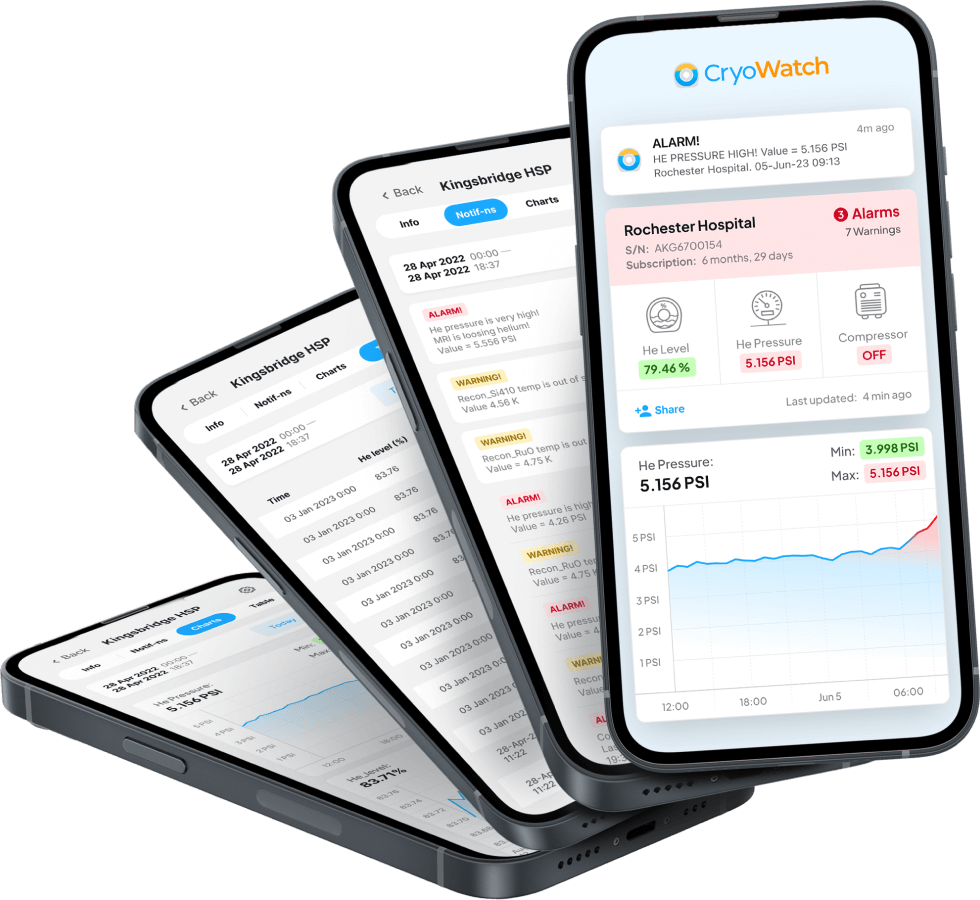
The hardware module transmits all the collected technical parameters to the network. It sends them directly to the Cryowatch cloud platform. This is a modern and very convenient remote monitoring system. The software continuously analyzes pressure and temperature graphs.
If your outdoor chiller stops coping with the heat, the gas pressure will slowly begin to rise. The platform will instantly notice this dangerous deviation. The software will immediately send a loud alarm notification to your mobile phone. Your service engineer will receive the alert long before the critical point. They can remotely shut down the system. They can rush to the clinic to repair the small pump or the chiller. You will avoid losing helium.
Practical Tips for Clinics
Take these important preventive measures today:
- Check your outdoor chiller. Carefully clean all radiators from dust and debris.
- Check the cooling water flow. Make sure the small pump runs smoothly and without strange vibrations.
- Create shade for the outdoor unit. A simple canopy can significantly lower the casing temperature.
- Check the air conditioners. The units in the technical room can also break down from severe overload.
- Monitor the data. Check the pressure graphs in your remote monitoring system every day.
Extreme heat does not forgive negligence. Medical equipment works to the limit on every hot day. Do not rely on luck. Entrust your clinic’s safety to smart digital solutions. Reliable monitoring will save your finances and protect your nerves. Your valued patients will undergo their examinations exactly on schedule. Protect your scanner from overheating right now.