The global market is facing a serious problem. We see an acute shortage of liquid helium. The main reason lies in the conflict in the Middle East. This region is a key supplier of this valuable resource. For example, Qatar produces a huge share of the global supply. Logistics chains are now severely disrupted. Merchant ships are forced to change their usual routes. Delivery by sea takes much more time. Gas prices are rising rapidly every month. This hits many industrial sectors very hard. But modern medicine takes the hardest blow.
The Role of Helium in Modern Diagnostics
Any modern MRI machine cannot work without liquid helium. Inside the medical scanner, there is a large superconducting magnet. This magnet must be incredibly cold. A special cryo cooling system is used to achieve this goal. It maintains a temperature close to absolute zero.
Famous global manufacturers create very reliable medical equipment. For example, the GE healthcare company produces excellent scanners. Their famous Signa product line operates successfully all over the world. But even such advanced machines depend entirely on regular helium supplies. Without this valuable gas, the magnet will simply lose its unique properties. The work of the entire diagnostic center will stop completely.
The Impact of the Conflict on Complex Logistics
Why does a political conflict affect supplies so much? The problem lies in the physical properties of the gas itself. Helium is very difficult to store for a long time. It constantly evaporates into the atmosphere. It must be delivered to clients very quickly.
Transport ships usually go through the Red Sea. Now, this convenient route has become very dangerous. Logistics companies are forced to send ships on a long detour. Transport time increases greatly. During the long journey, a part of the liquid helium simply boils off on the way. Medical clinics receive much less gas. At the same time, they pay much more for delivery. This creates huge financial problems for any business.
The Danger of a Sudden Technical Breakdown
The resource shortage makes any technical breakdown a real disaster. Under normal working conditions, the machine preserves its gas itself. But the cooling system can suddenly break down.
- The external water chiller on the street may fail.
- An important small pump works in this water circuit.
- If the small pump suddenly stops, the water will stop circulating.
- The helium compressor will overheat quickly and turn off.
The active cooling of the magnet will stop immediately. The gas will begin to boil off very quickly. The pressure inside the system will start to rise rapidly. An emergency and noisy release of gas into the street will occur. Engineers call this a quench. In the past, a clinic could quickly buy new gas for a refill. Now, doing this is very difficult and expensive. The queue for delivery can take many long months. Your expensive scanner will simply stand idle without doing any useful work.
Financial Risks for Medical Clinics
The prices for medical services also depend on these factors. When equipment maintenance becomes very expensive, the clinic loses its profit. The cost of one full refill of the magnet has increased several times. Finding a free volume of the resource on the market has become a real test. Many suppliers are canceling old contracts. They demand new, strict payment terms. Business owners must minimize the risk of accidental emergencies.
Digital Monitoring as the Main Salvation
We cannot influence global ship logistics. We cannot stop the conflict in the Middle East. But we can reliably protect our valuable equipment. The main task today is to prevent the accidental loss of the resource. You need strict control over the condition of complex equipment.
Manual checks of the room no longer work effectively. An engineer cannot sit next to the machine around the clock. You need automatic, continuous telemetry collection. For this, engineers created special smart equipment. An excellent example is the modern Magmon hardware module.
How the Smart Protection System Works
This compact device connects directly to your magnet’s sensors. The module collects important technical data every second. It accurately measures the level of liquid gas. It checks the temperature of the cooling shields. It monitors the internal working pressure.
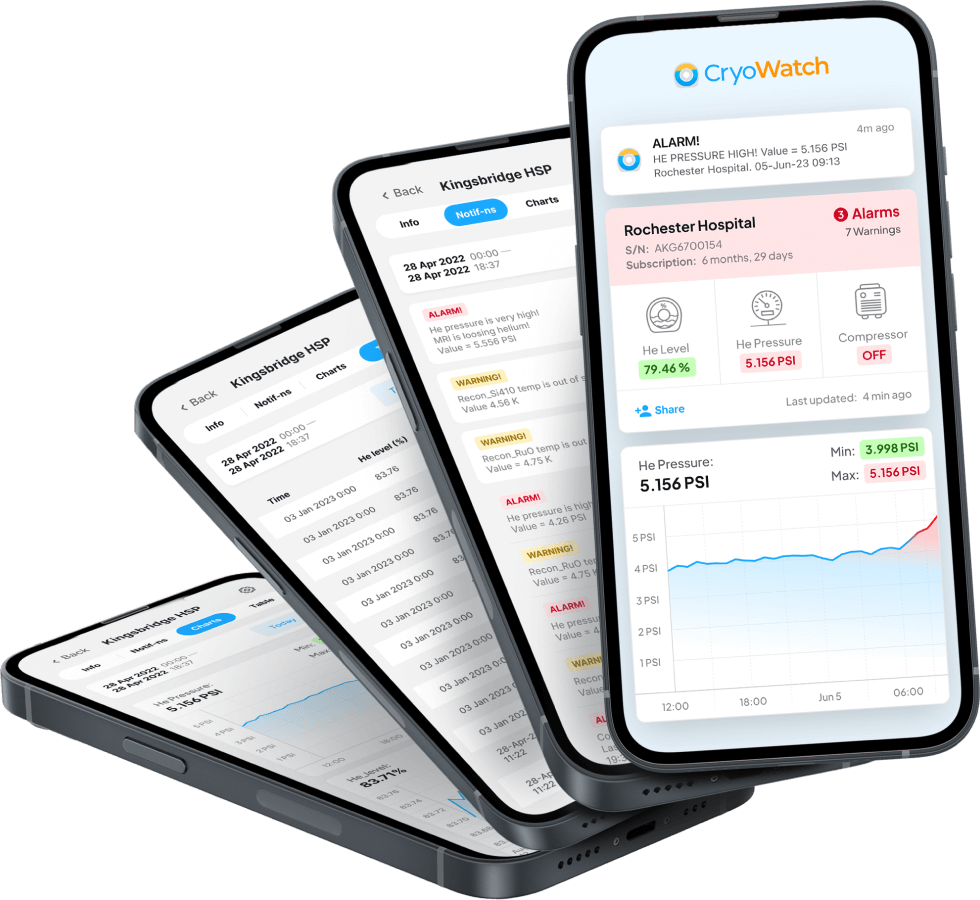
All these data must be analyzed very quickly. The Cryowatch cloud platform is used for this task. The module instantly transmits all collected information into this system. The platform works in a fully automatic mode. It looks for dangerous temperature deviations itself.
Let us assume the pressure started to rise slowly due to a broken chiller. The system will immediately notice this negative trend. It will instantly send a loud alarm notification to your phone. Your service engineer will receive the alert in advance. They will have time to arrive quickly at the clinic. They will promptly repair the equipment before the critical moment. The machine will safely continue to work. You will save a precious resource. You will save the clinic from huge financial losses.
Conclusion and Next Steps
In conclusion, the current market situation requires immediate action. You cannot wait for the global supply crisis to end. You must act today to secure your medical facility. Medical centers must quickly adapt to these new harsh realities. Protecting your expensive financial investment is your primary goal.
Use modern digital tools for your daily monitoring work. Keep a close eye on the continuous telemetry data. This proactive approach guarantees stability for your entire system. Your patients will thank you for reliable and timely service. Your medical business will survive the helium shortage without any unexpected losses. Smart digital control is simply the best answer to this global crisis.