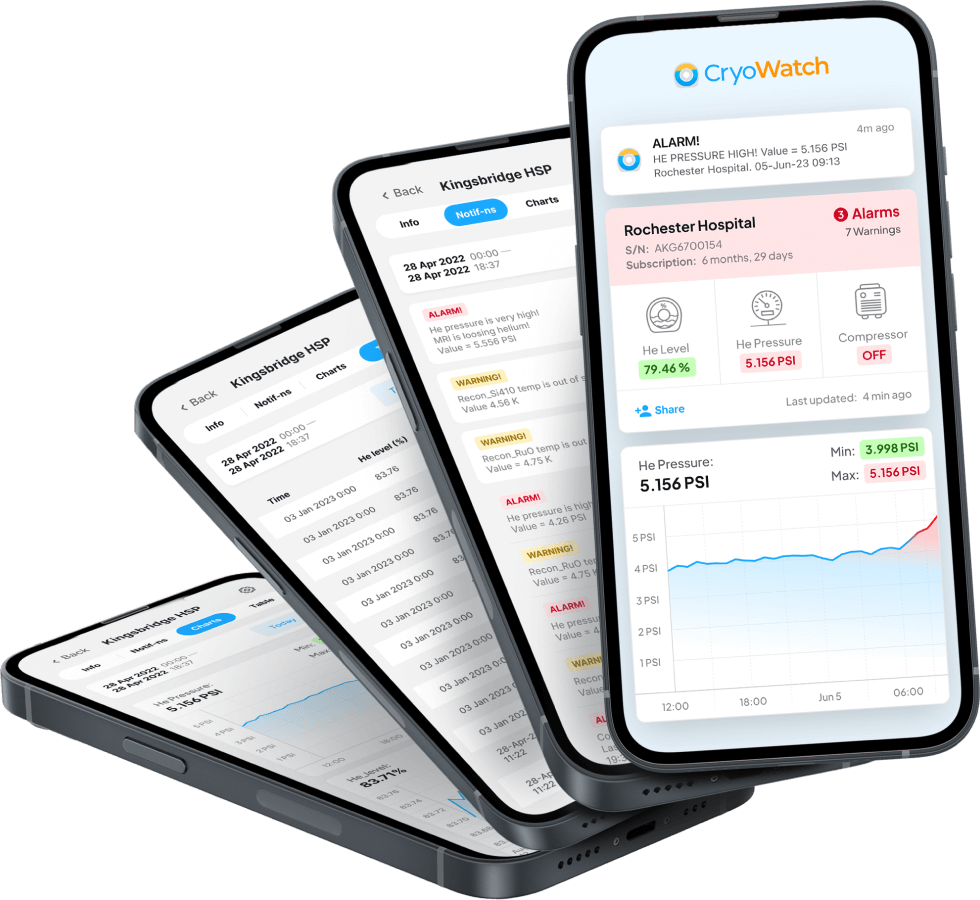
As we approach the summer of 2026, meteorologists are predicting record-breaking temperatures. For an MRI clinic, “hot weather” isn’t just about staff comfort—it’s a direct threat to the system’s survival. When the ambient temperature rises, your chiller and cryogenic system work at their absolute limits. Here is how to prepare your GE Healthcare Signa (and […]
April 11, 2026In the world of high-tech medicine, there is a dangerous illusion: “If something happens to the magnet, the insurance will cover it.” While insurance is a vital tool for business stability, relying on it as your primary safety net for an MRI system is a high-stakes gamble. In 2026, as equipment and helium costs reach […]
April 9, 2026Many clinic owners are convinced that hiring an experienced radiologist and a certified engineer ensures the safety of their MRI system. Unfortunately, practice shows that even the most loyal employee can become the reason for a system failure. Not out of malice, but due to habit, negligence, or a lack of oversight.
February 16, 2026In 2026, the MRI industry is facing a reality that analysts call “Helium Shortage 4.0.” Liquid helium has ceased to be a mere technical gas. It is now a strategic asset—”blue gold”—whose price is soaring while its availability plummets.
February 13, 2026Many clinic owners believe that if their MRI scanner is connected to an Uninterruptible Power Supply (UPS), the system is completely safe. However, in practice, a UPS often only protects the console and the electronics, while the “power-hungry” component—the cooling system compressor—is left alone to face the harsh realities of the municipal power grid.
February 9, 2026When we discuss the operational stability of a GE Healthcare MRI, the focus is usually on the magnet itself. However, experienced engineers know that the fate of expensive liquid helium and the continuity of patient schedules depend on an external unit: the chiller.
January 30, 2026The events took place during the New Year holiday season. The clinic was closed for the holidays from December 31st to January 3rd. Only a security guard was on-site, who had no access to the MRI technical room and was not trained to check the status of the cryo system.
January 21, 2026For a service engineer or a clinic owner working with GE healthcare equipment, understanding the differences between magnet monitor generations is critically important. While both devices perform the same fundamental task—monitoring the status of the cryo system—there is a significant technological gap between them.
January 19, 2026In the world of modern MRI diagnostics, the most common machines are those with a magnetic field strength of 1.5 Tesla and 3.0 Tesla. For a patient, these are just numbers, but for an engineer or a physician, they represent two different technological universes. GE healthcare is a leader in manufacturing both systems, offering world-class […]
January 17, 2026